
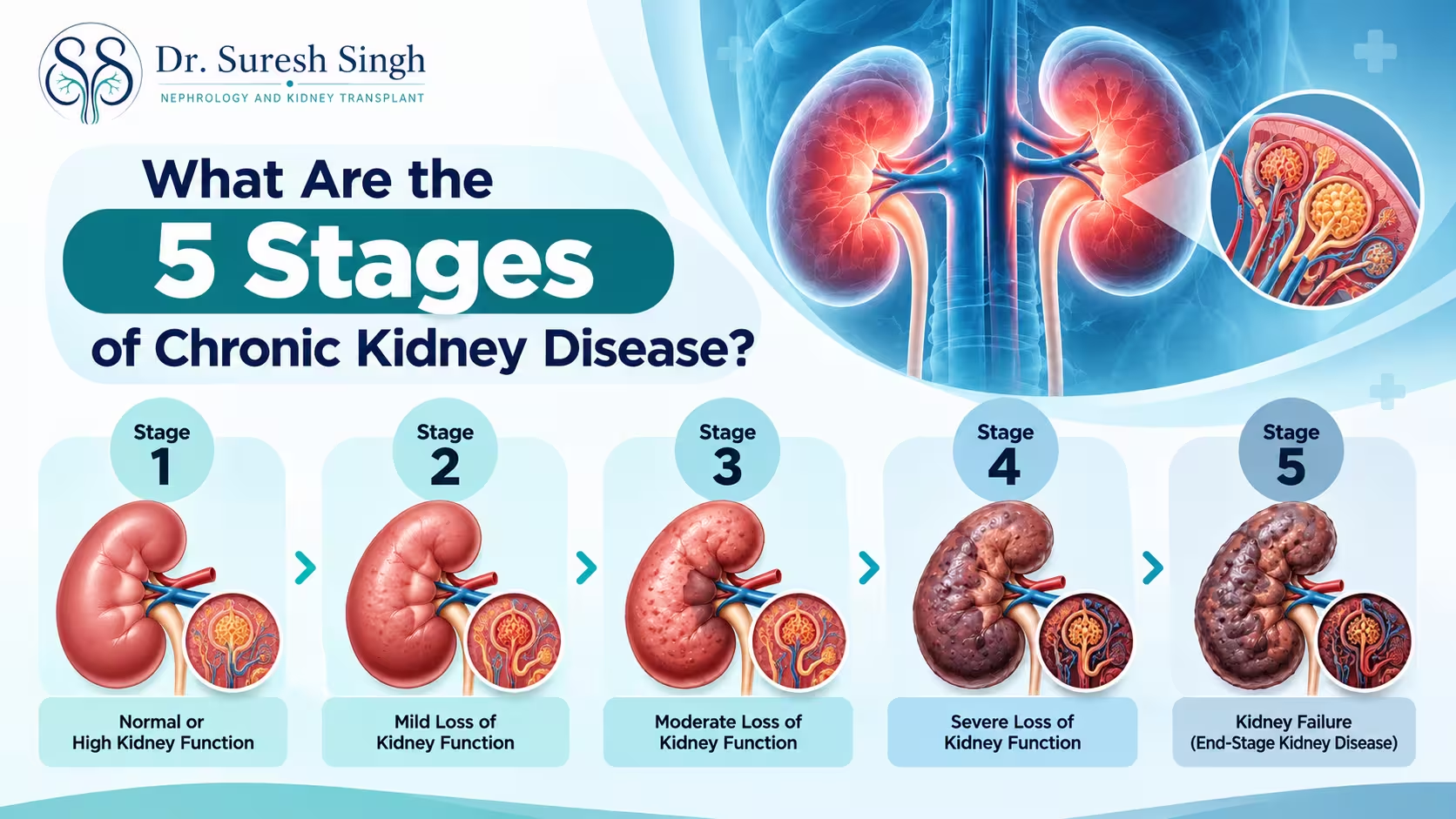
Chronic Kidney Disease (CKD) is divided into five stages based on your estimated Glomerular Filtration Rate (eGFR), which measures how well your kidneys filter waste from your blood.
What Are the Five Stages of Chronic Kidney Disease?
Doctors use a test called the estimated glomerular filtration rate (eGFR) to assess how well the kidneys filter waste from the blood. They also check for protein in the urine and other signs of kidney damage.
Although CKD is commonly described in five stages, stage 3 is divided into stage 3a and stage 3b. This is why medical reports may show six categories.
|
CKD Stage |
eGFR Level (mL/min/1.73 m²) |
What It Means |
|
Stage 1 |
90 or above |
Normal or high filtration, but other evidence of kidney damage is present |
|
Stage 2 |
60–89 |
Mildly reduced kidney function, with evidence of kidney damage |
|
Stage 3a |
45–59 |
Mild to moderate loss of kidney function |
|
Stage 3b |
30–44 |
Moderate to severe loss of kidney function |
|
Stage 4 |
15–29 |
Severe loss of kidney function |
|
Stage 5 |
Below 15 |
Kidney failure or very severely reduced kidney function |
These numbers help doctors understand a patient's condition, but they cannot predict exactly how a person will feel or how quickly the disease may progress.
Stage 1 Kidney Disease: Early Damage With Normal Filtration
At this stage, the kidneys continue to filter the blood effectively. The eGFR will be 90 or above, meaning the blood test results will not be alarming.
The problem here is that other tests can show some signs of damaged kidneys. For instance, a urine test might reveal the presence of albumin, which is a certain type of protein that should stay in the blood.
Most of the time, there are no symptoms at this stage. The diagnosis is made while doing a regular medical examination of a person with diabetes or high blood pressure.
The treatment will involve identifying what causes the problems and how to prevent further damage to the kidneys.
Stage 2 Kidney Disease: Mild Loss of Kidney Function
If the eGFR is 60-89 in stage 2 of the disease, there should also be evidence of kidney damage.
One might feel perfectly well without any visible symptoms like swelling, pain, or changes in the process of urinating.
It can be complicated to understand why one has CKD, considering that there are no issues in daily living.
The doctor will consider the cause of kidney damage and its progression, as well as take care of diabetes control, blood pressure management, and follow-up visits.
An eGFR of 60-89 alone cannot indicate the presence of kidney disease. There should be evidence of kidney damage along with that test result.
Stage 3 Kidney Disease: Moderate Loss of Kidney Function
Stage 3 has been further split into two because the amount of renal function can vary widely among patients in this stage.
For stage 3a, the eGFR will range from 45 to 59, and for stage 3b, it ranges from 30 to 44.
Some people will continue feeling fine but will experience fatigue or swelling in their legs. Other symptoms can include anaemia and mineral balance disturbances due to reduced kidney function.
Physicians will closely look at kidney function, urine protein, blood pressure, and blood tests. Medication can be reviewed to ensure the dose remains appropriate according to kidney function.
This stage doesn't mean that the patient needs dialysis treatment. There are many cases where this stage is successfully managed through treatment.
Stage 4 Kidney Disease: Severe Loss of Kidney Function
Stage 4 CKD, the GFR will range from 15 to 29. With this, the kidneys' ability to filter out waste products and fluids from the body becomes impaired.
The patient experiences fatigue, loss of appetite, nausea, skin itching, and swelling. Other conditions include anaemia and bone problems.
Visits to a nephrologist are highly recommended. These visits involve evaluation of lab results and discussion of medications. Any complications are addressed during these visits.
Dialysis and kidney transplant are also part of the discussion when the functioning of the kidneys worsens. Planning provides the necessary time to understand the available treatments.
Stage 5 Kidney Disease: Kidney Failure
Stage 5 is the last stage of chronic kidney disease. The eGFR (estimated glomerular filtration rate) is less than 15, and the kidneys are not able to filter a minimum of 15% of blood. Waste and extra fluid build up in the body. This causes tiredness, nausea, poor appetite, itching, swelling, and problems with breathing.
There are many factors a doctor considers when making treatment decisions. These include results from blood tests, what a patient’s symptoms are, and the doctor’s overall assessment of the patient’s health. There is medication that can help manage symptoms; however, some patients also require dialysis to help remove extra fluid and waste from their blood. Transplant is also an option. Generally, dialysis is not based on the eGFR alone. Symptoms and test results are important as well.
Can Chronic Kidney Disease Progress From One Stage to Another?
Yes, it can. However, the rate of progression is different for everyone.
Some people remain at the same stage for years, while others experience a faster decline in kidney function. Diabetes, uncontrolled high blood pressure, the underlying kidney condition and other health problems can influence how the disease progresses.
A change in eGFR does not always mean permanent damage. Dehydration, an acute illness and certain medicines can cause kidney function to change temporarily. Doctors may repeat tests to understand whether the decline is lasting.
Regular monitoring helps identify these changes. It also allows treatment to be adjusted when necessary.
How Is Chronic Kidney Disease Diagnosed?
A single blood test is rarely enough to explain the complete condition. Doctors usually combine several findings before confirming CKD and deciding its stage.
Blood test for creatinine and eGFR: This helps estimate how well the kidneys are filtering waste from the blood.
Urine albumin-to-creatinine ratio (uACR): This checks whether albumin is leaking into the urine. Protein leakage can indicate kidney damage even when eGFR is normal.
Urine routine and microscopy: This can detect blood, protein and other abnormalities that may point towards kidney problems.
Blood pressure measurement: High blood pressure can damage the kidneys and may also become harder to control as kidney disease progresses.
Kidney ultrasound: If needed, this can help doctors check the size and structure of the kidneys and look for certain structural problems.
Chronic kidney disease generally requires evidence of kidney damage or reduced kidney function lasting at least three months. However, a sudden decline in kidney function needs prompt assessment and should not be left unchecked.
What Can Help Slow the Progression of Kidney Disease?
Knowing that your kidneys aren't functioning as well as they should is understandably worrying. The stage of kidney disease helps a doctor understand how much the kidneys have been affected and what the treatment options may be.
In many situations, the goal of treatment is to keep the blood pressure and blood sugar as close to target as possible. Some medications may slow kidney damage.
Treatment is usually aimed at preventing kidney function from getting worse. You may need to be on a special diet based on your kidney function.
Blood tests and urine tests can check to see if you need to change how much water you drink. Not everyone with CKD needs to avoid the same foods or drink less water. Your doctor will let you know if you need a special diet.
Personalised Kidney Care With Dr. Suresh Singh
Choosing the right specialist is important when managing chronic kidney disease. Dr. Suresh Singh, a Nephrologist in Lucknow, has over 5 years of nephrology experience. He has performed over 50 kidney transplants and 200 kidney biopsies, with expertise in CKD management, glomerular diseases, dialysis, and interventional nephrology. His clinical experience and focus on individualised, evidence-based care help patients understand their kidney condition, explore suitable treatment options, and receive guidance for ongoing kidney health management.
Related Treatments
Depending on the diagnosis, stage of kidney disease, and individual clinical needs, the following services may be relevant:
Conclusion
Knowing which stage the kidney disease is at would allow you to be aware of the areas that require attention in the present and those that will require attention in the future. In case your blood tests have shown that you have poor kidney function, the next step should be to consult a doctor to interpret the results.
Dr. Suresh Singh, Consultant Nephrologist and Kidney Transplant Physician, Lucknow has +5 years of experience in Kidney Transplant, Chronic Kidney Disease, Dialysis and advanced kidney care. He will be able to guide you through understanding the reports and choosing the right treatment options.
Frequently Asked Questions
1. Is it possible that CKD affects both kidneys?
Yes, CKD normally affects both kidneys. This impairment is not equal in both organs. Several tests including blood test, urinalysis, and sometimes even scanning help the doctor to understand how kidneys function.
2. Can a person with CKD keep working?
Yes, it is possible to go on with daily activities and work even in case of CKD. It depends on how the kidneys function, how you feel, and what kind of activities you perform.
3. Do all CKD patients have to have a kidney biopsy?
No, all CKD patients don't need to have a biopsy of the kidney. In some cases a biopsy of the kidney is required to determine the causes of the disease.
4. Is it possible for a child to suffer from CKD?
Yes. This is because the child could suffer from a congenital disease that causes CKD or any other illness or disease.
5. Can a patient with CKD undergo kidney transplantation?
Yes. Certain patients with advanced CKD are capable of undergoing kidney transplantation. The medical professional will assess the overall well-being of the patient as well as the condition of the kidneys before deciding whether or not to go for the transplant.